Interim UX leadership for product companies preparing to hire their first permanent UX executive.
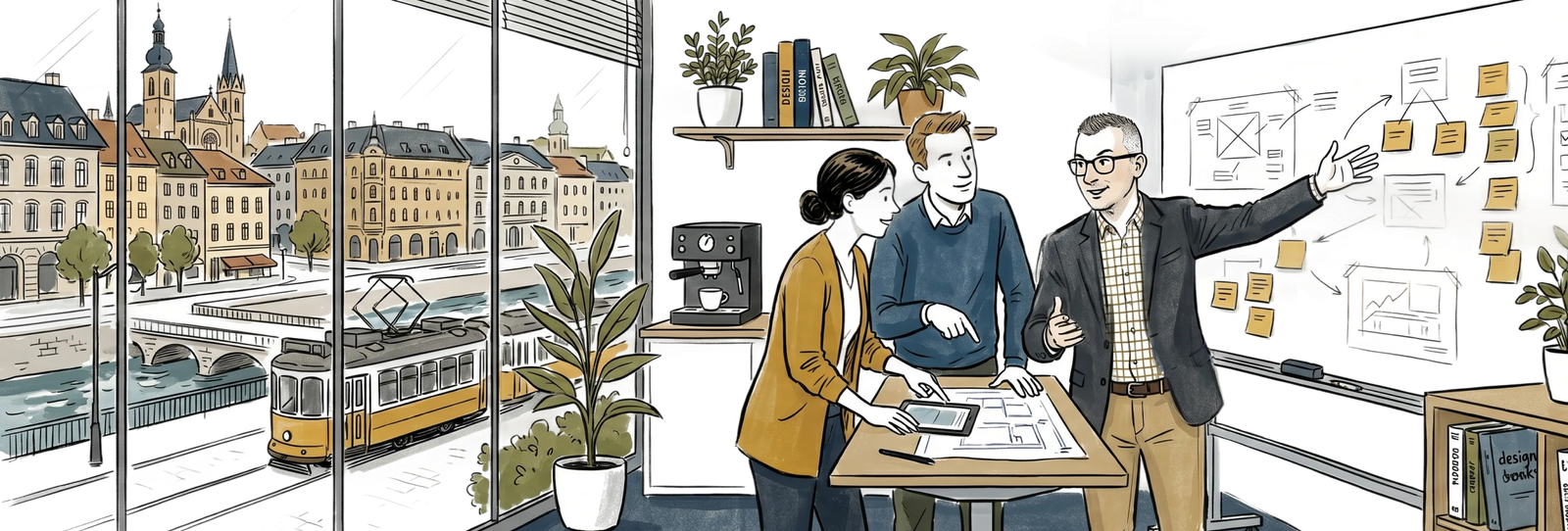
There’s a period in most product companies’ growth where UX is clearly the next function to mature, but a permanent senior hire is premature. The company needs strategic direction, a working research practice, and a UX voice in executive conversations — now, not in the nine to twelve months it takes to hire a senior leader well. At the same time, committing to the salary, equity and multi-year mandate of a permanent executive before the ground is prepared for them is the wrong sequence.
This residency fills that gap. For an agreed period, I step in as your UX executive — setting strategy, directing the work of your designers and researchers, and representing UX in the conversations where product decisions actually get made. By the time your permanent leader is in post, they inherit a function that works, rather than one they have to rescue.
Fully remote. Three-month minimum commitment.
What changes during the residency
Change begins in the first month and compounds from there. By the end of the residency, you have:
- A functioning UX leadership role — set up, scoped, and running — that your permanent hire can inherit rather than build from scratch.
- UX represented as an equal voice in executive, product, and board conversations, with relationships already established.
- A research practice that operates proactively and strategically, and produces insights that reshape the long-term direction of your product.
- A UX vision the whole company can rally around, with a cascading system of outcomes and metrics connecting it to daily product work.
- Your team’s own number on the cost of current experience gaps — the kind of number that unlocks budget conversations and ends prioritisation arguments previously stuck at the level of opinion.
- Your first permanent UX leader hired with confidence, into ground that’s already prepared.
After the residency ends, your permanent UX leader walks into a function that is already running — and starts making progress from day one.
Why the residency exists
Most mid-stage product companies reach a point where the absence of senior UX leadership starts to cost them visibly. Roadmaps fill with features rather than outcomes. Research, where it happens at all, arrives too late to reshape a decision. Designers and researchers operate with no senior voice above them to translate the work into executive language, and no cover from leadership when product decisions need to be pushed back on. UX ends up respected in principle and sidelined in practice.
The instinctive response is to start a search for a permanent executive. But the search takes two to three quarters to run well, and even when the right person is found, they walk into a function with no strategic direction, limited operational infrastructure, and no executive relationships already built on their behalf. They spend their first year doing groundwork that could have been done before they arrived — and the company spends that year carrying both the senior salary and the ongoing cost of poor UX.
The residency exists to make that first year someone else’s problem. For three to nine months, I serve as your UX executive — fractional but fully embedded. I build the strategy, install the operational foundations, and earn the executive relationships. When your permanent leader is hired, they inherit the work of a UX function that’s already running, and start making progress from day one.
Who this is for
Tech product companies that have outgrown running without UX leadership, but aren’t yet ready for a full-time executive on the payroll. The residency is designed to de-risk that first hire — installing the strategy, the operational foundations, and the executive relationships before the permanent leader walks in.
A mid-stage product business, past product-market fit, with real customers and real growth ahead. A small existing UX team — a handful of designers, possibly a researcher, no senior leadership above them. Executive sponsorship at CEO, CPO, or CTO level: someone who wants the work to land and will back the decisions that come from it.
The fit comes down to two kinds of readiness. A readiness to let UX do strategic work — shaping the product, rather than just executing on decisions made by other teams. And a readiness to let a fractional executive operate with real authority: setting direction, representing UX externally, and making calls that stick.
How it works
The residency begins with the first month’s work. I run a structured listening tour across your executive team, spend time with the designers and researchers already in place, and audit how design and research currently operate inside the business. Alongside these conversations, I study the documents, artefacts, and data that describe where the product is today and where the organisation has tried to take it. The goal is a clear, defensible read on where UX sits today and where it needs to move.
From there, the shape of the work is set by the organisation’s needs. Some months lean heavily on strategic direction and executive conversations. Others on reshaping how research and design are practised day to day. Others on coaching the senior people who will carry the function forward after the residency ends. Throughout, I formalise how UX works with product, engineering, and customer-facing teams — the processes and rituals a permanent hire will inherit rather than have to build from scratch. The work is continuous rather than project-based: I’m in the conversations where product decisions get made.
From the midpoint onwards, every decision gets made with one eye on the handover. Together we define the profile, mandate, and hiring plan for your first permanent UX leader. The artefacts and relationships built during the residency are documented and handed over, ready for them to walk into on day one.
Pricing and terms
Three-month minimum, monthly retainer, paid in advance. Scope is agreed at the outset and scales with the time commitment. The engagement is fully remote, so no travel costs. Specific figures are covered on an introductory call.
Residencies are carefully spaced. I never run two in the same sector concurrently. And I never take on more than I can do properly.
Who you’d be working with
I’m Kyrylo Slavetski, a UX strategy consultant with twenty years in product design, UX research, and design leadership across a range of product companies. For most of that career, I’ve been doing what the residency describes — running UX inside product organisations as a senior leader, shaping strategy, building teams, and representing the function at the executive level. The residency is that work offered fractionally, to companies that need it before they’re ready to hire it permanently. Based in the Netherlands, working with clients across Europe and, when the fit is right, further afield.
Frequently asked
How is this different from hiring a full-time UX executive?
A senior UX executive search takes six to nine months before the new leader is in post. The residency starts in weeks, at a fraction of the cost, which matters when the internal case for the role is still being built. The deeper advantage is sequencing: by the time you do hire, the strategy, the operational foundations, and the executive relationships are already in place. The permanent leader inherits a function that works, rather than one they have to rescue.
How is this different from your UX Strategy Programme?
The UX Strategy Programme is a facilitation engagement. Your team does the work and I guide it, through a six-month series of workshops and between-session coaching. The UX Leadership Residency is a leadership engagement. I do the work, as your executive, from inside the organisation. The scope covers everything the Strategy Programme does and extends further — into day-to-day direction of your team, executive representation, operational foundations, and preparation for your first permanent hire.
How long does the engagement run?
Three months is the minimum. KSLV is a young practice, and the residencies I structure are designed for six to nine months — long enough to build the strategy and the operational foundations, earn the executive relationships, and prepare for a clean handover. Twelve months can make sense where the scope is larger or the path to permanent hire is longer. The length is set by when the organisation is ready to hire permanently, so there is no fixed schedule.
What if we’re not sure we’re ready for this?
The discovery call is designed to sort that out. If you’re genuinely not ready — the executive sponsorship isn’t in place, or the team isn’t yet mature enough to absorb this kind of change — I’ll say so, and suggest where to start instead. More often, companies that are "not sure" are further along than they think, and the conversation helps clarify the readiness that’s already there.
Who do you report to?
A named executive sponsor — typically the CEO, CPO, or CTO. The sponsorship matters more than the title. The residency only works if someone at the top of the organisation wants it to work and will back the decisions that come out of it.
Will you manage our existing designers and researchers directly?
Yes, for the duration of the engagement. Existing team leads stay in place and keep running their teams day-to-day. I set direction, represent the function externally, and coach senior people towards the roles they’ll grow into under your permanent UX leader.
What about confidentiality and competing clients?
Mutual NDAs as standard. I don’t run concurrent residencies with companies competing in the same product category — that includes direct competitors and close adjacents.
How is the residency priced?
A monthly retainer, scaled to the time commitment and scope agreed at the outset. Three-month minimum, paid in advance. Specific figures are covered on an introductory call.
Let’s talk
Thirty minutes is usually enough to know whether the residency fits your situation. The call is genuinely diagnostic — I’ll ask about your company, your team, the UX work already happening, and where you think it needs to go. If the residency is the right engagement for where you are, we’ll discuss what it would look like. If a different engagement would serve you better — or if you’re not yet at the point where this kind of support helps — I’ll say so.
Write to me at kslv@kslv.io, or schedule a call directly.